Recruiters glance at the resume, then move on
The Ladders eye-tracking study found recruiters spend about 7 seconds on a first resume scan. A list of duties, a typo or a format the ATS can't read ends it there.
Fixed by02Resume & CV
Your people have the degrees and the skills. What they lose is the 30 minutes in front of the panel. We build candidates who walk in ready and walk out selected.
Be honest for 60 seconds. Tap every moment you have seen in your candidates this season. Most interviews feel fine from outside; the real test is how many end in an offer.
Your candidates' interview readiness map appears here.
Fix these in my candidatesIt is rarely the degree, the marks or the market. Your candidates get their applications out and interviews lined up. The leaks are in how they look on paper, walk in, handle nerves, answer, perform in groups and follow up. Tap a stage to find yours.
The Ladders eye-tracking study found recruiters spend about 7 seconds on a first resume scan. A list of duties, a typo or a format the ATS can't read ends it there.
Princeton research by Willis and Todorov (2006) found people judge competence from a face in a tenth of a second. Posture, greeting and eye contact speak first.
McCarthy and Goffin (2004) found candidates with higher interview anxiety received lower interview ratings. Nobody trained the nerves.
Sackett and colleagues (2022) found structured interviews are the strongest predictor of job performance, so panels score evidence. Opinions and model answers score low.
Anderson and Kilduff (2009) found people who speak up early and confidently gain influence in groups, even without more competence. Your best thinkers stay silent.
In an Accountemps survey, 80% of HR managers said thank-you notes help when they review candidates. Few candidates send one, and offers are handled without a conversation.
Unprepared interviews don't stay in the interview room. Every lost offer is paid for twice: once in the drives, travel and hours it took to get there, and again in a weaker placement record, a passed-over employee who leaves or a recruiter who never returns.
Pick the situations on the left to see your score.
interview moments where preparation, not qualification, decided the outcome.
Rate 12 everyday interview moments, see your Interview Readiness Score today, and what it becomes after the program.
The program takes days. A lost placement season can cost years. Start before another batch faces the panel unprepared.
Stop the loss: book a callFound your interview leak? Seal it before another drive goes by.
Most interview training dies in the gap between the session and the interview. Michael Phelps rehearsed every race in his mind so often that race day held no surprises. Here is our journey, from the first conversation to candidates who walk in ready.
We gather the facts: your candidates, recent placement or selection data, the roles and recruiters you target, and give you full clarity on how we work.
What you get: A shared, honest picture of where your candidates stand today.
We run baseline mock interviews, audit resumes, speak to recruiters and panel members, and find the real gap. It is often not the one first named.
What you get: The right problem, before anyone spends on a solution.
We match modules, batch sizes and mock panels to your calendar, your target roles and your budget, not a ready-made package.
What you get: A program designed for you, not borrowed from someone else.
Every activity, mock interview and GD uses your real roles, recruiters and job descriptions, so each minute moves candidates closer to the offer.
What you get: Learning aimed precisely at your interview gap.
Candidates choose their target role and commit to a readiness plan in their own words. Self-determination research shows chosen goals outlast imposed ones.
What you get: Candidates who own their preparation, because they chose it.
We stay with your candidates through resumes, mock panels and the real drive or interview day, clearing roadblocks as they appear.
What you get: Preparation that turns into offers, not notes.
Mock-interview scorecards track every candidate, catch what is slipping and adjust the plan in time, the way the US Army's after-action reviews keep units improving.
What you get: Progress you can see, and gaps caught early.
As new needs appear, from a new recruiter to a promotion cycle, we facilitate the next learning exactly when your people are ready for it.
What you get: Candidates who keep growing after the program.
An interview-ready culture takes root. Seniors coach juniors, selection records rise and recruiters return, season after season.
What you get: The result you invested in: lasting growth in selections.
Training is one step out of nine. The other eight are why the selections follow.
Fix a symptom and it returns next season with a new name. Toyota built its quality on asking "why?" five times. Pick your interview problem and see what changes when it is fixed at the root.
Great interviewees are not born confident. They are built, module by module. APJ Abdul Kalam missed his dream of flying for the Air Force by one place in the selection interview; he went on to become India's Missile Man and President. Eleven modules, in sequence, each sealing a leak from episode 2. Tap the wheel.
Candidates treat interviews as a lottery, walk in afraid and know little about the organisation or how panels decide.
Before and afterKFC rejected Jack Ma, the only one of 24 applicants it turned down. He went on to found Alibaba. Mindset decides what a rejection becomes.
Resumes are copied templates that list duties, carry typos and use formats the ATS can't read.
The scienceIn a CareerBuilder survey, 77% of hiring managers said typos or bad grammar can get a resume rejected.
'Tell me about yourself' gets a recited biodata, and the panel forgets the candidate before the next one walks in.
Before and afterAll India Radio once turned down a young Amitabh Bachchan because of his voice. That voice became his signature.
Candidates slouch, fidget, avoid eye contact or dress wrong, and lose the panel before they speak.
The scienceStewart and colleagues (2008) found a firm, confident handshake was linked to higher hiring recommendations.
Good candidates blank out, speak too fast or crumble when the panel turns tough.
The scienceHarvard's Alison Wood Brooks (2014) found people who said 'I am excited' before a stressful task outperformed those who tried to calm down.
Answers are memorised, generic or too long, and sound like every other candidate's.
The scienceGoogle's former people chief Laszlo Bock called brainteasers 'a complete waste of time'; Google moved to structured, evidence-based questions.
Salary, career gaps, failures and personal questions trigger panic, defensiveness or oversharing.
Before and afterAt his Microsoft interview, Satya Nadella answered a crying-baby question with 'call 911' and was told he needed empathy. He learnt, and later led Microsoft as CEO with empathy at its core.
In GDs, candidates either stay silent or shout over others, and assessors notice both for the wrong reasons.
The scienceWoolley and colleagues (2010, Science) found the smartest groups take turns and read each other well: exactly what GD assessors reward.
Phone and video rounds feel awkward: poor light, weak sound, eyes on notes and a flat voice.
The scienceA meta-analysis by Blacksmith, Willford and Behrend (2016) found candidates are rated lower in video and phone interviews than face to face.
After the interview: silence, pushy calls, or offers accepted and dropped without a conversation.
Before and afterFacebook and Twitter both rejected Brian Acton in 2009. He posted a gracious note and kept building; in 2014 Facebook bought his WhatsApp for $19 billion.
Nobody knows who is ready until the drive or the panel day, when it is too late to fix anything.
The scienceRoediger and Karpicke (2006) found practising under test conditions beats re-reading for long-term recall. That is why we test before the real day.
By Friday, people forget most of what they heard on Monday. They remember what they did. So your candidates don't just hear about confidence, answers and body language: they practise them in games, mock interviews and real cases until it becomes the way they interview. Tap each step and try it.
Experience, understand, practise, apply. Every session rises like a wave, with high-energy interview games balanced by quiet moments of insight and live mock interviews.
Feel the 11 interview modules in action with your own candidates, your real roles and your real recruiters.
The best way to learn interviews is from someone who has faced them from both sides of the table. Saurabh Jain came out of a village government Hindi-medium school, joined corporate India as a medical representative in 2003 and rose to MSD Rajasthan State Head, building teams along the way. He has since conducted 2,500+ trainings across 32+ industries and held an audience for 30 hours non-stop. He brings both sides to your candidates: what panels really look for, and the craft of showing it with confidence. No theory for its own sake, just methods your candidates use in their very next interview.
A venture of Pragya. Bharat’s No. 1 Soft Skills Training Centre.
“Learning & Motivation का महाकुम्भ”, home of the 30-hour non-stop speech.
Each one could have ended the story. Tap a card and see what happened next.
जिन्दगी मैं फिर तैयार हूँ, तू कोई कमी मत छोडना मेरे मजे लेने में,क्योंकि मैं कोई कसर नहीं छोड़ने वाला तेरे मजे लेने में."Life, I am ready again. Don't hold back in testing me, because I won't hold back in living you."
Saurabh JainHis core belief: a great candidate is not born. Interviewing is a learnable, repeatable skill of preparation and presence, and that is exactly what he teaches your people.
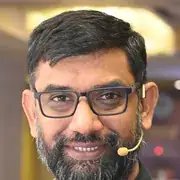
“Training is not just my profession. It's my purpose, my passion and my profession.”
Your candidates have sat through enough interview sessions that felt great on the day and changed nothing. This is what he does differently.
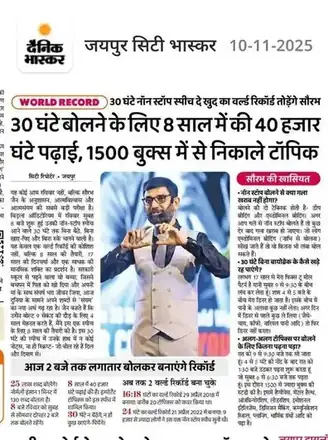
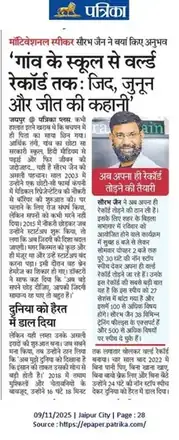
500+ media houses have covered Saurabh Jain, from Dainik Bhaskar and Rajasthan Patrika to ANI and The Print. Tap any clipping to read it.

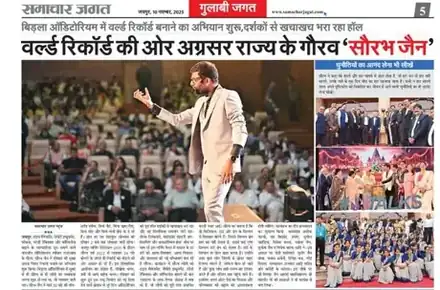
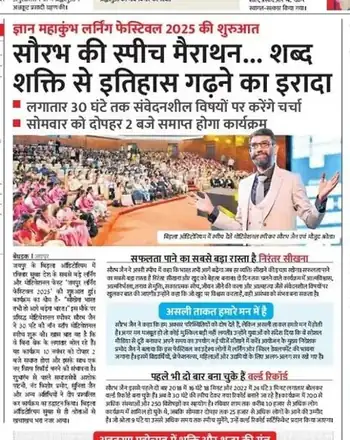
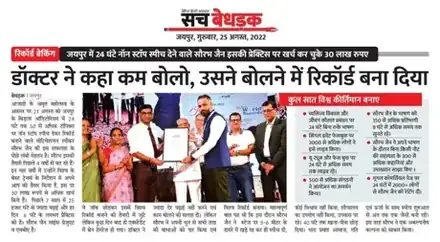
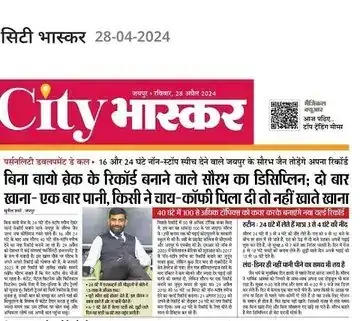
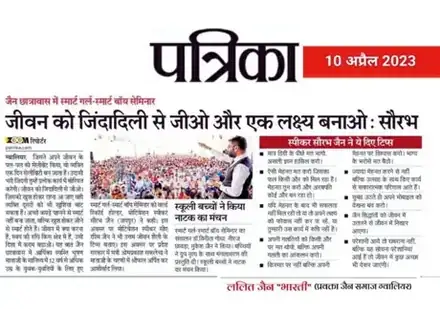
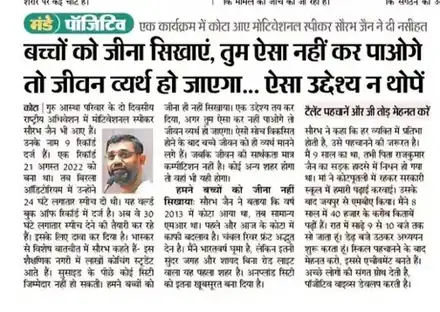
See how he holds a room, moves a group and makes a single idea stick: the same presence your candidates will learn to bring to every interview. Press play on any one.
Choose what is holding your candidates back. See the result, the shift and how it will feel, for your candidates and for your organisation.
Hover over or tap each card to see the shift candidates experience with Saurabh Jain. A meta-analysis by Kanfer and colleagues (2001) linked job-search self-belief to employment success.
Most training proposals die in one meeting, on one of these five sentences. Tap yours and walk in with the answer. The decision stays yours.
If nothing changes: Qualified candidates keep losing offers to less qualified ones who interview better.
Qualification gets the interview; interview skill gets the offer. We keep their knowledge and build the skill of showing it: resume, introduction, answers and presence.
Proof: The India Skills Report 2025 found only about 55% of Indian graduates employable, and the gap is mostly skills, not degrees.
If nothing changes: Training that cannot show results is the first budget line cut, and the rejections continue.
We agree the measures with you upfront: baseline and final mock-interview scores, resume shortlist rates, GD clearance and your own selection or placement numbers.
Proof: Maurer and colleagues (1998) found promotion candidates who attended interview coaching scored higher in the real interview.
If nothing changes: Your candidates already lose weeks reapplying after every avoidable rejection.
Half-day modules, staggered batches around classes or shifts, weekly or online sessions, and practice built into the drives and interviews already on your calendar.
Proof: Short, spaced sessions beat one long cram: a 2006 review of 254 studies by Cepeda and colleagues found spaced practice improves retention.
If nothing changes: Training that fades is the costliest kind: you pay once, then keep paying in rejections.
Events fade when practice ends with them. Ours continues: a 21-day logbook, repeat mock interviews, a final readiness check and mentor reviews.
Proof: Anders Ericsson's research on expert performance (1993) showed skill grows through deliberate practice with feedback, not information alone.
If nothing changes: Every season of waiting, another batch faces the panel unprepared, and your record shows it.
The next drive rarely arrives with more time, and every offer lost is lost for that season.
Proof: In 2000, Blockbuster passed on buying Netflix for $50 million and chose to wait. It filed for bankruptcy in 2010.
Before you decide, see what unprepared interviews cost your organisation every year: offers lost in the final round, seats and reputation at risk, and people who leave after being passed over. SHRM puts the average cost of one external hire at about $4,700, so every role your own people win saves part of it.
If your people face interviews, panels or group discussions, they are being judged, trained or not. Pick a group and see what changes for your organisation.
“Recruiters come, but take only a handful of our students.”
More students placed, better packages and recruiters who return.
“Trainees finish the course, then fail their first interview.”
Higher placement outcomes, and trainees who stay in the job.
“Our best performers freeze in front of the promotion panel.”
Internal talent that wins the role, and stays.
“Our exiting employees haven't faced an interview in ten years.”
People placed faster, and an employer brand that stays respected.
“Our students clear the written exam, then lose marks in the interview.”
More final selections, and toppers who become your best advertisement.
32+ industries and institutions. One proven way to build candidates who walk in ready and walk out selected.
Pick a duration and a setting. We shape the rest around your candidates and your hiring calendar.
Your candidates may have attended a pre-placement talk or a "top 50 questions" session. It felt useful for a day. Here is why our change lasts, and shows up in every interview.
It is not "Can we afford interview training?"
It is "Can we afford another season of rejections?"
Saurabh Jain is a Jaipur-based interview preparation and employability skills coach with 23+ years of experience. He started his career as a medical representative in 2003 and rose to MSD Rajasthan State Head before founding EnactraX, Bharat's No. 1 Soft Skills Training Centre, and the Jaipur Learning Festival. He has conducted 2,500+ trainings across 32+ industries, holds 10 World Records, including a 30-hour non-stop speech without any break, and has received 200+ awards. His interview preparation training builds candidates who research, introduce themselves, answer, stay calm and follow up like professionals.
Eleven modules in sequence: interview mindset, inner conditioning, hiring reality and organisation research; resume and CV mastery; personal branding and a signature introduction; interview etiquette, body language and first-impression control; handling nervousness and pressure; answering common interview questions; handling difficult and personal questions; group discussion; telephonic and virtual interviews, advanced strategies and NLP tools; follow-up etiquette, offer discussion and post-interview behaviour; and a final interview assessment and readiness check. It suits college and university placement batches, skill development and CSR programs, employees facing internal or promotion interviews, outplacement and career transition, and coaching institutes preparing government, bank and admission interview aspirants.
More shortlists from stronger resumes; more candidates clearing group discussions and final rounds; higher placement percentages and better packages for colleges; more internal roles won by your own people; recruiters who come back; offers discussed and accepted professionally; and a reputation for interview-ready talent. Results are tracked through mock-interview scorecards, a final readiness check and your own selection numbers.
Half day, full day, a few days, or regular weekly or monthly sessions across the placement or promotion season. Saurabh Jain delivers in-person interview preparation training anywhere in the world from his Jaipur base: your campus, office, training hall or a hotel, across Rajasthan, every Indian city and internationally. Live online training is available in any time zone. Sessions run in English, Hindi or a mix of both.
The investment depends on duration, setting, number of candidates, mock-interview panels and customisation, so every organisation gets a customised proposal within one working day of the discovery call. The ROI calculator on this page compares the cost with the selections, placements and retention your organisation can gain.
Every candidate takes a baseline mock interview and a pre and post check, faces repeat mock panels scored on a clear scorecard, and finishes with a final interview assessment and readiness check. Each participant receives a certificate, an interview workbook, a 21-day logbook, a rewritten resume and a personal readiness plan. Your organisation receives a batch readiness report.
Talk to Saurabh Jain about your candidates, your hiring or placement calendar and the offers you're losing. Free, with no obligation, and a reply within 24 hours.
Takes less than a minute.
We understand your candidates, target roles and timelines.
Within one working day, shaped to your candidates.
Every great series ends with a celebration. With Saurabh Jain, yours starts on the last day of the interview preparation program and never really ends.
Certificates, a mock-interview showdown won, and candidates who walk out confident, proud and ready for any panel.
The logbook is complete. Research, STAR stories and calm breathing now happen without thinking.
More shortlists, more GDs cleared, more offers, and recruiters who ask to come back.
Every career that starts well lifts your reputation, and every confident alumnus or employee brings the next one.
“An interview doesn't test what you know. It tests how well you can show it.”