Best Soft Skill Trainer in Jaipur, Rajasthan, IndiaSoft skills training for your team. Build agility.
Your people have the degrees and the domain knowledge. What leaks is how they adapt, listen, speak, decide, negotiate and follow through. We build the human skills that turn talent into results.
Proof: MIT Sloan-led research in Bengaluru garment factories found a soft skills program returned about 256% on its cost.
10World records
200+Eminent titles
100+Global training programs completed
23+YearsExperience
36Domain expertise
2,500+Training sessions conducted
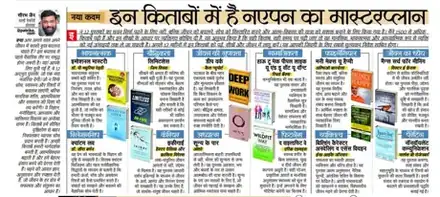
1,500+Self-help books mastered
40,000Study hours
₹40LakhInvested in his own upskilling
500+Media houses covered
4,250+Five-star Google reviews (Saurabh Jain + EnactraX)
500+Games and activities
Season 1 · 9 episodes
Soft skills training in Jaipur: from talented individuals to an unstoppable team in 9 episodes
Sixty seconds. No filters. Just the truth about how your people work together.
60-second soft skills test
Free soft skills health check: which of these sound like your team?
Be honest for 60 seconds. Tap every moment you have seen in your team this quarter. Most teams look fine in calm weeks; the real test is how they behave under pressure.
Six hidden leaks, and the price of waiting, every single month.
The 6 people leaks
Why talented teams still underperform: the 6 soft skill leaks we seal
It is rarely talent, salary or technology. Your people have the degrees and the domain knowledge. The leaks are in how they handle change, emotions, listening, communication, time and follow-through. Tap a stage to find yours.
Leak 01 · Stuck in change
Every change arrives as a crisis, not a chance
New systems, new bosses, new targets: rigid teams lose months to resistance. McKinsey has long reported that about 70% of change programmes fall short, mostly because of people's behaviour, not the plan.
Heated replies, silent sulks and blame cost more than any lost file. Center for Creative Leadership research found talented managers derail mainly through relationship problems and an inability to adapt, not a lack of technical skill.
Listeners recall only about half of what they hear right away, and about a quarter two days later (Ralph Nichols, Harvard Business Review). Add misread body language, and instructions turn into rework.
Unclear communication is expensive: the Project Management Institute found 56% of the money at risk on projects is at risk because of ineffective communication.
After an interruption, it takes about 23 minutes to fully return to a task (Gloria Mark, UC Irvine). Constant pings, unplanned meetings and unclear priorities quietly eat whole days.
Only 55% of middle managers could name even one of their company's top five priorities (Harvard Business Review, 2015). Without ownership, review and honest feedback, plans never land.
The cost of waiting: what if your team keeps working the old way?
Weak soft skills don't stay in one meeting. Every misunderstanding is paid for twice: once in hours of rework and delay, and again in lost clients, escalations and good people who quit.
1Pick the work moments where your team is not at its best
Your soft skill leak score0
Pick the situations on the left to see your score.
work moments where skill, not knowledge or effort, decided the outcome.
2Add your numbers
★ Most important: 1 minute
Take the 60-second challenge: how strong are your team's soft skills today?
Rate 12 everyday work moments, see your Soft Skills Score today, and what it becomes after the program.
THE 60-SECOND CHALLENGE
Your team's everyday moments: two possible endings
Self-rated for reflection. The after-program score is an illustrative target (+2 levels per moment), not a guaranteed result.
The program takes days. Weak soft skills can cost years. Start before another quarter is lost to friction.
And how we fix the root cause of friction, delays and drama.
The method we follow
Why most soft skills training fades by Monday: our 9-step soft skills training process
Most soft skills training dies on Monday morning, not in the room. British Cycling became an Olympic powerhouse through hundreds of small, constant gains, not one big day. Here is our journey, from the first conversation to a team that keeps getting better.
Before the training · UnderstandDuring · TransformAfter · Sustain
Swipe to see all 9 steps →
01
Before the training
Deep discovery, both ways
We gather the facts about your organisation, your people, your culture and your goals with HR, L&D and line managers, and give you full clarity on how we work. No assumptions on either side.
What you get: A shared, honest picture of where your people stand today.
We observe meetings, speak with managers and team members, review appraisal and engagement data, test what we find and redefine the real gap. It is often not the one first named.
What you get: The right problem, before anyone spends on a solution.
Every game, role play and case study targets the gap we found and uses your real situations, meetings and conflicts, so each minute in the room moves your team towards the result.
What you get: Learning aimed precisely at your people gap.
A strong, mature work culture takes root. Your team keeps adapting, listening, owning and delivering long after the program, and every new hire learns it from them.
What you get: The result you invested in: lasting growth in performance.
Training is one step out of nine. The other eight are why the results last.
The fix, at the root
Why Saurabh Jain's soft skills training fixes the root cause, not the symptom.
Fix a symptom and it returns next quarter with a new name. Toyota built its quality on asking "why?" five times. Pick your people problem and see what changes when it is fixed at the root, with proof from the world's best.
1What you see at work
2The real root cause
3The result you get
World proof
🧭
Episode 4 of 9 · The Path
11 soft skills, one clear path from talented to unstoppable
Each one seals a leak you saw in episode 2.
What your team learns
Soft skills training topics: 11 skills from talented individuals to an unstoppable team
Talent is hired; soft skills are built. When Google studied what made its best managers great (Project Oxygen), technical expertise ranked last of eight behaviours. Eleven skills, in this sequence, each sealing a leak from episode 2. Tap the wheel.
01
Adaptability & Agility
The problem it solves
Every restructure, new tool or new boss costs weeks of resistance, rumours and lost output.
Back at workYour people adjust fast, learn the new way quickly and help others move with them.
The science: A 2016 UCL study found people were more stressed by an uncertain shock than by a certain one. Agility training turns that threat into a plan.
What you practise
The change curve: from denial to commitment, faster
Reframe change from threat to opportunity
Learn, unlearn and relearn: the agile learning loop
Stay productive while plans are still moving
02
Emotional Intelligence (EQ)
The problem it solves
One heated reply or one sulk after a meeting, and a whole team loses a day of trust and work.
Back at workYour people notice their emotions, manage them and read others, so pressure no longer decides how they behave.
The science: UCLA brain scans show that simply naming an emotion calms the amygdala, the brain's alarm centre.
What you practise
Goleman's four domains: self-awareness, self-management, social awareness, relationship management
Name it to tame it: a 90-second reset under pressure
Read the feeling behind words, emails and silence
Empathy that solves problems, not just sympathises
03
Non-Verbal Communication
The problem it solves
Crossed arms, a flat voice or a glance at the phone tells clients and colleagues more than the words, and nobody notices.
Back at workYour people's posture, eye contact, voice and expressions say the same thing as their words: confident, credible, trustworthy.
The science: Princeton research found people judge trustworthiness from a face in just 100 milliseconds.
What you practise
Posture, gestures and presence that signal confidence
Voice: pace, pause, pitch and warmth
Read the room: signals of doubt, agreement and stress
Body language on video calls and in virtual meetings
04
Active Listening
The problem it solves
People hear the first half, assume the rest and act on it. The result is rework, wrong deliveries and upset clients.
Back at workYour people listen to understand, confirm what they heard and act on the real need the first time.
The science: Princeton brain scans show that when communication works, the listener's brain activity mirrors the speaker's.
What you practise
Three levels of listening, and the power of the pause
Paraphrase and confirm before you act
Questions that uncover the real need
Listen fully in meetings, on calls and on chat
05
Communication & Influential Skills
The problem it solves
Good ideas die in long emails and rambling meetings, while louder but weaker ideas win.
Back at workYour people say it clearly, structure it well and win support for their ideas, upward, sideways and with clients.
The science: In Ellen Langer's Harvard study, adding a reason with 'because' raised agreement to a request from 60% to 94%.
What you practise
Say it in 30 seconds: point, reason, example
Clear emails, updates and presentations
Cialdini's principles of influence, used ethically
Persuade without authority: influencing peers and seniors
06
Critical Thinking & Problem-Solving
The problem it solves
Teams jump to the first solution, fight symptoms and repeat the same mistakes every quarter.
Back at workYour people question assumptions, find root causes and choose solutions with evidence, not opinion.
The science: Imagining that a plan has already failed, a 'pre-mortem', raised people's ability to identify reasons for an outcome by about 30%.
Everyone is busy, yet deadlines slip. Urgent noise eats the important work every single day.
Back at workYour people plan their week, protect focus time and deliver the important work on time, without burning out.
The science: Switching between tasks can cost up to 40% of productive time (Rubinstein, Meyer and Evans).
What you practise
The Eisenhower matrix: urgent versus important
Plan the week, block deep-work time
Say no, or 'not now', without damaging relationships
Meeting, email and phone habits that give hours back
08
Strategic Planning & Excellence in Execution
The problem it solves
Great plans are announced at the offsite and forgotten a month later. Targets slip, and nobody owns them.
Back at workYour people turn strategy into clear goals, owners and weekly actions, and follow through until the result arrives.
The science: Across 94 studies, 'if-then' plans that name when and where people will act made goals far more likely to be reached.
What you practise
From vision to goals: OKRs and SMART targets
Break plans into owners, milestones and weekly actions
Execution rhythm: weekly reviews and scoreboards
Anticipate risks and adjust without losing the goal
09
Negotiation & Conflict Resolution
The problem it solves
Value is given away under pressure, and conflicts between teams simmer for months.
Back at workYour people negotiate win-win outcomes, protect value and resolve conflict before it turns personal.
The science: Tversky and Kahneman showed that even a random number from a spun wheel can anchor people's estimates. The first number on the table matters.
What you practise
Interests, not positions: the Harvard negotiation method
Know your BATNA, walk-away point and anchor
Handle pressure tactics calmly
Resolve conflict with the five conflict styles
10
Art of Giving & Receiving Feedback
The problem it solves
Feedback is avoided until appraisal time, then delivered as a shock. Problems stay hidden until they explode.
Back at workYour people give specific, kind and honest feedback, receive it without defending, and fix problems early.
The science: A review of 131 studies (Kluger and DeNisi) found that in over a third of cases, feedback made performance worse. How you give it decides everything.
What you practise
The SBI model: situation, behaviour, impact
Feedforward: focus on what to do next
Receive feedback without defending or sulking
Psychological safety: make it safe to speak up
11
Positive Attitude & Ownership
The problem it solves
Blame, complaints and 'not my job' spread faster than any memo, and quietly drain energy and results.
Back at workYour people take ownership, stay hopeful in setbacks and lift the energy of everyone around them.
The science: Barbara Fredrickson's research shows positive emotions widen attention and the range of ideas people can see.
What you practise
Learned optimism: explain setbacks the right way
Circle of control: focus where you have influence
Ownership language: from 'they should' to 'I will'
Daily gratitude and energy habits that last
🎬
Episode 5 of 9 · Behind the Scene
What really happens inside the room?
Games, role plays and the moments people remember.
★ Signature training method
Saurabh Jain's 7-step training method: learning that sticks
By Friday, people forget most of what they heard on Monday. They remember what they did. So your people don't just hear about listening, feedback and execution: they practise them in games, role plays and real cases until it becomes the way they work. Tap each step and try it.
Inside the room
Inside a soft skills training session: how the energy flows
Experience, understand, practise, apply. Every session rises like a wave, with high-energy team games balanced by quiet moments of insight and live role plays.
Aha moments
Laughter
Breakthroughs
Goosebumps
Role plays
Confidence
Clarity
Celebration
High energy
Bonding
Aha moments
Laughter
Breakthroughs
Goosebumps
Role plays
Confidence
Clarity
Celebration
High energy
Bonding
Feel the 11 soft skills in action with your own team, your real situations and your real challenges.
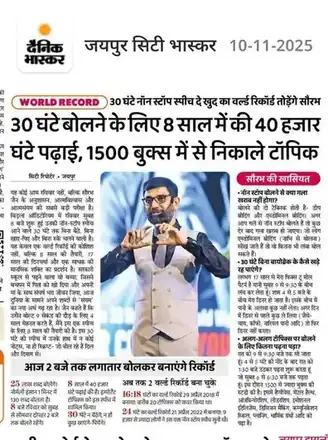
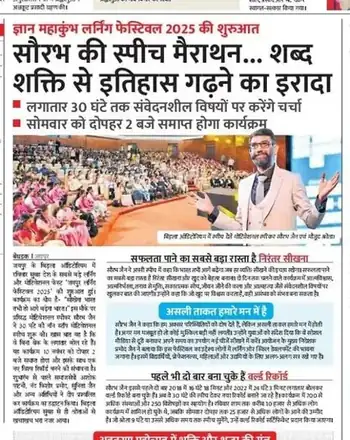
Who speaks for 30 hours non-stop, without any break?
Meet the man behind the method.
Your soft skills trainer
Why Saurabh Jain is the best soft skill trainer in Jaipur, India
Soft skills are best learned from someone who has used them under pressure. Saurabh Jain started as a medical representative in 2003, rose to MSD Rajasthan State Head and led people through targets, change and conflict before he founded EnactraX, Bharat's No. 1 Soft Skills Training Centre. He has since conducted 2,500+ trainings across 32+ industries and held an audience for 30 hours non-stop. No theory for its own sake, just methods your people use in their very next meeting.
Founder
EnactraX
A venture of Pragya. Bharat’s No. 1 Soft Skills Training Centre.
Founder
Jaipur Learning Festival
“Learning & Motivation का महाकुम्भ”, home of the 30-hour non-stop speech.
10World records
200+Eminent titles
100+Global training programs completed
23+YearsExperience
36Domain expertise
2,500+Training sessions conducted
1,500+Self-help books mastered
40,000Study hours
₹40LakhInvested in his own upskilling
500+Media houses covered
4,250+Five-star Google reviews (Saurabh Jain + EnactraX)
500+Games and activities
Tap each card
Then and now: 8 moments that should have stopped him
Each one could have ended the story. Tap a card and see what happened next.
0 / 8 stories revealed
The day doctors said "no more speaking", he wrote this from his ICU bed
जिन्दगी मैं फिर तैयार हूँ, तू कोई कमी मत छोडना मेरे मजे लेने में,क्योंकि मैं कोई कसर नहीं छोड़ने वाला तेरे मजे लेने में.
"Life, I am ready again. Don't hold back in testing me, because I won't hold back in living you."
Saurabh Jain
His core belief: great professionals are not born. Soft skills are learnable, repeatable habits, and that is exactly what he teaches your team.
HonoursVaishya Gaurav, by the Rajasthan CMLifetime Achievement AwardYouth IconJSG वाचस्पतिBest Entrepreneur, ICF+ 200 more
Featured onDiscovery ChannelANIThe PrintAhmedabad Mirror
Soft skills, honestly taught: why it works
Built on psychology and neuroscience
Goleman, Dweck, Kahneman and Cialdini, taught simply and applied to your own workplace, without jargon
Modelled on real leadership
From medical representative to State Head: methods he used to lead people through targets, change and pressure, decoded into steps
Practised, not just presented
Every participant handles live role plays of tough conversations, gets structured feedback and goes again, better
Your workplace, your situations
We work on your real meetings, conflicts, reviews and client moments, so the change is ready for tomorrow morning
500+ activities and learning games
Games, energizers and simulations that make people practise listening, feedback and teamwork without feeling lectured
Measured, not assumed
Pre and post assessment, role-play scorecards and manager feedback show exactly what changed
“Training is not just my profession. It's my purpose, my passion and my profession.”
Saurabh Jain
Why Saurabh Jain
The right trainer changes every conversation after.Here is why HR heads, L&D teams and business leaders choose Saurabh Jain.
Your people have sat through enough soft skills trainings that felt great on the day and changed nothing. This is what he does differently.
🔍
Episode 7 of 9 · The Evidence
Don't take our word for it
The brands that trusted him, and what the media wrote.
Partner brands
Brands and institutions that trust Saurabh Jain for soft skills and corporate training
In the news
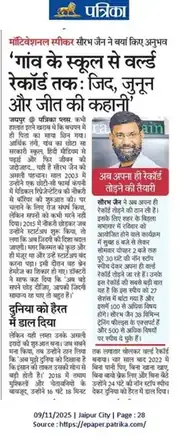
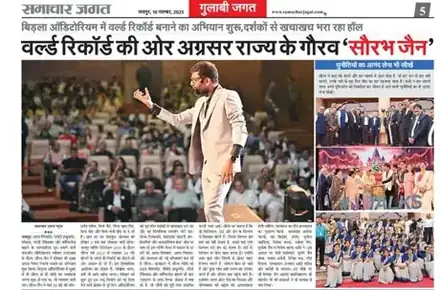
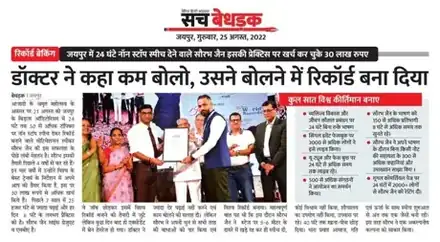
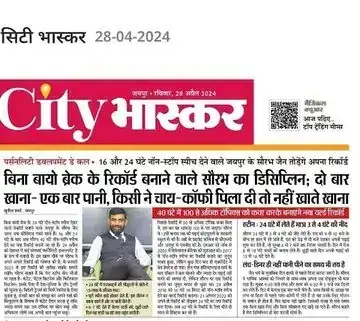
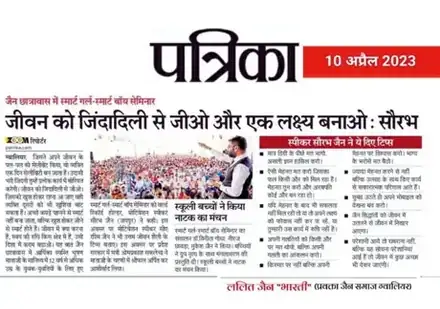
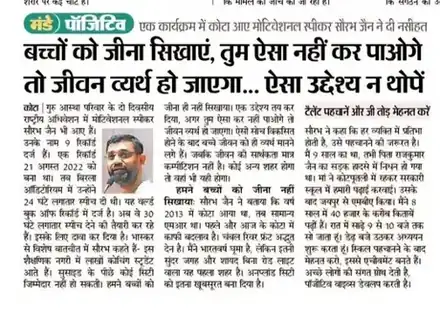
Jaipur's world record trainer in the news
500+ media houses have covered Saurabh Jain, from Dainik Bhaskar and Rajasthan Patrika to ANI and The Print. Tap any clipping to read it.
Watch him in action
Watch the soft skills trainer in action: two minutes say more than any brochure.
See how he holds a room, moves a team and makes a single idea stick: the same presence your people will learn to bring to every meeting. Press play on any one.
Your doubts answered, what it is worth, who it is for, why we are different, and your next step.
Before you decide
Is soft skills training worth it? The five reasons organisations wait, answered
Most soft skills training proposals die in one meeting, on one of these five sentences. Tap yours and walk in with the answer. The decision stays yours.
1/5doubts answered
If nothing changes: Talented people keep clashing, misreading each other and leaving.
Degrees prove knowledge, not behaviour under pressure. We keep your people's expertise and build the human skills that make it work together. Your managers own the follow-through.
Proof: LinkedIn's Global Talent Trends found 89% of talent professionals say a hire that fails usually lacks soft skills, not technical skills.
Try itDoes your team already do these? Tap what is true.
If nothing changes: Training that cannot show results is the first budget line cut, and the friction continues.
We agree the measures with you upfront: pre and post assessment, role-play scorecards, manager observation and a results report on the KPIs you choose.
Proof: In one study, training alone lifted productivity 22%; training plus follow-up coaching lifted it 88%.
If nothing changes: Your people already lose hours every week to unclear emails, repeated meetings, conflict and rework.
Half-day modules, staggered batches so no team is left empty, weekly or online sessions, and practice built into the meetings and reviews your team already has.
Proof: Even while running Microsoft, Bill Gates blocked two "Think Weeks" a year just to learn.
If nothing changes: Training that fades is the costliest kind: you pay once, then keep paying for old habits.
Events fade when practice ends with them. Ours continues: a 21-day logbook, practice refreshers, manager coaching and progress reviews.
Proof: Robert Brinkerhoff's research found only about 15% of trainees use new skills in ways that improve results, mostly because nothing follows the event.
Try itAfter a one-off session with no follow-up, how much is still remembered?
Hermann Ebbinghaus's classic 1885 memory data, shown for illustration.
Soft skills training ROI calculator: cost vs results
Soft skills training ROI calculator: cost versus the results you will get
Before you decide, see what weak soft skills cost your organisation every year: salary paid for hours lost to miscommunication, conflict and rework, and good people who quit. Gallup estimates replacing an employee costs half to two times their annual salary; we use the low end. Hours are valued only at salary cost, never as revenue.
What kind of team?
Use the figure from your proposal, or an estimate.
What weak soft skills cost your organisation every year
Who should join this soft skills training program?
If your people work with colleagues, clients or a boss, they use soft skills every hour, trained or not. Pick a group and see what changes for your organisation.
Built for your
Freshers and new joiners
01
Sounds familiar?
“They know the subject, but not yet how to work with people.”
After the training
Confident professionals who fit in, speak up and grow faster.
32+ industries. One proven way to build people who work better together.
IT and softwareBanking and financial servicesInsurancePharma and healthcareHospitals and clinicsManufacturing and engineeringAutomobileFMCGRetailReal estate and constructionHospitality and travelEducation and ed-techTelecomLogistics and supply chainE-commerce and D2CConsulting and professional services
IT and softwareBanking and financial servicesInsurancePharma and healthcareHospitals and clinicsManufacturing and engineeringAutomobileFMCGRetailReal estate and constructionHospitality and travelEducation and ed-techTelecomLogistics and supply chainE-commerce and D2CConsulting and professional services
Government and PSUsChartered accountants and finance firmsMining and metalsEnergy and renewablesTextiles and apparelGems and jewelleryMedia and advertisingBPO and customer serviceNGOs and social sectorChemicals and paintsAgri and food processingAviationStartups and SMEsFamily businessesSchools and collegesFranchise networks
Government and PSUsChartered accountants and finance firmsMining and metalsEnergy and renewablesTextiles and apparelGems and jewelleryMedia and advertisingBPO and customer serviceNGOs and social sectorChemicals and paintsAgri and food processingAviationStartups and SMEsFamily businessesSchools and collegesFranchise networks
Choose your format
In person or online: choose your soft skills training format
Pick a duration and a setting. We shape the rest around your team and your goals.
Most soft skills trainings are lectures. Ours changes behaviour.
Your team may have attended a motivational talk or a slide-heavy soft skills workshop. It felt great for a week. Here is why our change lasts, and shows up in every meeting, review and client conversation.
✕Typical soft skills training
VS✓Saurabh Jain's soft skills training
Approach
Typical trainingGeneric modules and borrowed examples.
Saurabh's trainingDiagnosed first, built on your culture, roles and real situations.
Practice
Typical trainingWatch slides, take notes, go back to work.
Saurabh's trainingLive role plays of tough conversations, again and again.
Results
Typical trainingA motivational high, gone by Monday.
Saurabh's trainingScorecards, manager follow-up and a results report.
Who leads it
Typical trainingA trainer who has never led a team under pressure.
Saurabh's trainingA former MSD State Head with 2,500+ trainings and 10 World Records.
What you get
Typical trainingA certificate and the same old habits.
Saurabh's trainingPeople who adapt, listen, influence, own and deliver.
The real question
It is not "Can we afford soft skills training?" It is "Can we afford another year of friction, rework and resignations?"
Freediscovery call1 dayto your customised proposal
Soft skills training in Jaipur: frequently asked questions
Who is the best soft skill trainer in Jaipur, India?
Saurabh Jain is a Jaipur-based soft skills trainer and corporate trainer with 23+ years of experience. He is the founder of EnactraX, Bharat's No. 1 Soft Skills Training Centre, and the Jaipur Learning Festival, and a former MSD Rajasthan State Head who has led teams himself. He has conducted 2500+ trainings across 32+ industries, holds 10 World Records, including a 30-hour non-stop speech without any break, and has received 200+ awards. His soft skills training builds people who adapt fast, stay calm under pressure, listen, influence, solve problems, negotiate, give honest feedback and deliver on plans.
Which soft skills does the training cover, and who should attend?
Eleven skills, in this sequence: adaptability and agility; emotional intelligence (EQ); non-verbal communication; active listening; communication and influential skills; critical thinking and problem-solving; prioritization and time management; strategic planning and excellence in execution; negotiation and conflict resolution; the art of giving and receiving feedback; and positive attitude and ownership. It suits new joiners and freshers, customer-facing and service teams, team leads and middle managers, senior leaders and department heads, and technical, IT and operations teams. HR and L&D teams can choose all eleven or only the modules their people need most.
What are the benefits of soft skills training for employees and the organisation?
Teams that adapt to change without drama; calmer conversations under pressure; fewer misunderstandings, rework and escalations; meetings that end in decisions; better priorities and on-time delivery; negotiations that protect both value and relationships; a feedback culture where problems surface early; and higher engagement and retention. Results are tracked through pre and post assessments, manager observation and the business measures you choose.
Which formats, and where do you train?
Half day, full day, a few days, or regular weekly or monthly sessions. Saurabh Jain delivers in-person soft skills training anywhere in the world from his Jaipur base: your office, a hotel, your annual meet or your offsite, across Rajasthan, every Indian city and internationally. Live online soft skills training is available in any time zone. Sessions run in English, Hindi or a mix of both.
What does soft skills training cost, and what is the return?
The investment depends on duration, setting, number of participants and customisation, so every organisation gets a customised proposal within one working day of the discovery call. The soft skills training ROI calculator on this page compares the cost with the salary hours your organisation wins back from miscommunication, conflict and rework, and with lower attrition.
How do you measure results? Is there a certificate?
Every participant takes a pre and post assessment, practises live role plays scored on a clear scorecard and leaves with a personal action plan. We agree business measures with HR and L&D upfront, such as escalations, rework, on-time delivery, engagement scores and attrition. Each participant receives a certificate, a soft skills workbook, a 21-day logbook and a personal action plan. Your organisation receives a summary of the change.
Can HR and L&D customise the soft skills program for our company?
Yes. Every program starts with discovery and diagnosis: we speak with HR, L&D and line managers, review your competency framework and appraisal themes, and build case studies, role plays and examples from your own workplace. You can choose all 11 modules or only the ones your people need most, for one team or across locations.
Saurabh JainBest soft skill trainer in Jaipur and 10-time World Record holder
Diagnose. Train. Practise. Measure.
Book a free call with the best soft skill trainer in Jaipur
Talk to Saurabh Jain about your team, your culture and the friction that is costing you. Free, with no obligation, and a reply within 24 hours.
What happens next
1
You send the enquiry
Takes less than a minute.
2
Free discovery call
We understand your team, your challenges and your goals.
3
Your customised proposal
Within one working day, shaped to your team.
200+Awards
2500+Trainings
10World Records
23+Years
Bonus episode · The Victory
Celebrate the win. Enjoy the people payoff for life.
Every great series ends with a celebration. With Saurabh Jain, yours starts on the last day of the soft skills program and never really ends.
Day 1
The celebration
Certificates, a role-play showdown won, and people who walk out confident, connected and ready for Monday.
Day 21
The new habit
The logbook is complete. Listening, clear updates and honest feedback now happen without thinking.
Year 1
The new culture
A team that adapts, owns and delivers, with fewer conflicts, faster decisions and lower attrition.
For life
The lifelong payoff
Trust compounds. Every skilled person lifts the people around them, and every new hire learns the culture from them.
“Talent gets people hired. Soft skills get them trusted, promoted and followed.”