People nod in meetings, then disagree in the corridor
Mistakes are hidden, risks go unreported and ideas die unspoken. In a study by Milliken, Morrison and Hewlin, 85% of employees said they had stayed silent about an important concern at work.
Work culture and diversity training for teams losing ideas, trust and good people to silence, disrespect, bias and cliques, while the workforce grows more diverse every year.
Be honest for 60 seconds. Tap every pattern you have seen in your workplace this quarter. Each one is a habit nobody named, not a bad-people problem, and habits can be changed.
Salaries are fair and the office is good, yet people stay silent, clash, form cliques and leave. Six culture leaks cause it. Tap a stage to find yours.
Mistakes are hidden, risks go unreported and ideas die unspoken. In a study by Milliken, Morrison and Hewlin, 85% of employees said they had stayed silent about an important concern at work.
Shouting, sarcasm and public put-downs drain effort quietly. Porath and Pearson found 48% of people treated rudely cut their work effort, and 12% left the job.
Hiring and promotions drift towards 'people like us', and good people stop trying. In Bertrand and Mullainathan's study, identical CVs with white-sounding names got 50% more interview calls.
Regions, languages, generations and departments stay in their own circles, and ideas stop flowing. Eisenberger's brain scans showed social exclusion activates the same region as physical pain.
Exit interviews hint at the manager or the atmosphere, and every exit costs months of salary. MIT Sloan researchers found a toxic culture predicted attrition 10.4 times more strongly than pay.
Unclear boundaries, silent bystanders and a process nobody trusts let small issues grow. Under India's POSH Act 2013, an employer without an Internal Committee can be fined up to ₹50,000, and repeat violations can cost its licence.
Gallup's State of the Global Workplace found only 23% of employees are engaged, and puts the cost of low engagement at $8.8 trillion a year. Every silent meeting, every hurtful joke and every good person who leaves costs twice: once in money, and once in the ideas you never heard.
Pick the situations on the left to see your score.
moments where culture, not talent, decided the outcome.
Rate 12 everyday workplace moments, see your Culture Health Score today, and what it becomes after the training.
The training takes hours. A respectful, high-trust culture pays back every single day. Start before the next hiring round, appraisal cycle or resignation.
Stop the loss: invite SaurabhFound your culture leak? Close it before the next hiring round, appraisal cycle or resignation.
Most diversity sessions leave people with a list of do's and don'ts and the same habits on Monday. Culture changes only when behaviours become shared habits, rituals and measures. Here is our journey, from the first call with your HR team to a workplace where everyone belongs.
We understand your people, your history, your locations and what has been tried before, and share exactly how we work: the brief, the inputs we need and the timelines. No assumptions on either side.
What you get: A clear brief, and a trainer who knows your culture before he walks in.
A short anonymous survey and a few honest conversations check voice, respect, fairness, inclusion and trust. It is rarely 'bad people'. More often it is a habit nobody named, a fear nobody voiced or a process nobody trusts.
What you get: The real culture leak named, before any time or budget is spent.
We shape the pillars, case studies, language mix, duration and format for your people. A plant with workers from many states, a tech team full of Gen Z hires and a newly merged company need different training.
What you get: A program built for your people, not a recycled syllabus.
Every game, case and role play is drawn from situations your people really face, so every hour in the room changes how they treat each other on Monday.
What you get: Behaviours practised in the room, not just discussed.
Each team agrees three to five behaviours it will live by, and what happens when they are broken. Specific promises made in front of colleagues are far more likely to be kept.
What you get: Clear behaviours, clear owners and no more 'that's just how it is here'.
We help managers run the first check-ins, set up culture champions and recognition rituals, and handle the first tricky conversations on the ground.
What you get: New habits running in your workplace, not slides in a folder.
A monthly culture pulse, short manager check-ins and recognition reviews track progress. A Gallup and Workhuman study found employees who get great recognition are 45% less likely to leave within two years.
What you get: Progress you can see in numbers, and problems caught early.
Deeper programs such as leadership, team building, communication, workplace etiquette and emotional intelligence, exactly when your people are ready for the next stage.
What you get: A culture that keeps growing as fast as the organisation.
Respect, voice and fairness become 'how we do things here'. When Satya Nadella moved Microsoft from a 'know-it-all' to a 'learn-it-all' culture in 2014, its value rose from about $300 billion to over $3 trillion within a decade.
What you get: The result you invested in: a team that respects, includes and stays.
The training room is one step out of nine. The other eight are why the results last.
A policy email can't fix a culture problem. When Alan Mulally took over a loss-making Ford in 2006, he applauded the first manager brave enough to show a red flag; the speak-up culture that followed helped Ford avoid a government bailout. Pick the problem your team faces every week and see what changes when it is fixed at the root.
Gordon Allport's contact research, confirmed across 515 studies by Pettigrew and Tropp, shows prejudice falls when people work together as equals towards a shared goal. Nine pillars, in sequence, each closing a leak your team lives with every day. Tap the wheel.
People stay silent about mistakes, risks and ideas because speaking up feels unsafe.
Proven: Google's Project Aristotle studied 180 teams and found psychological safety was the number one factor behind its most effective teams.
Rudeness, shouting and sarcasm are excused as 'just his style'.
Proven: In John Gottman's research, contempt was the single strongest predictor of a relationship breaking down. Teams are no different.
Hiring, appraisals and promotions are shaped by first impressions and familiarity.
Proven: When top orchestras added a screen to auditions, women's chances of advancing rose by about 50% (Goldin and Rouse, 2000).
Different genders, generations, regions and abilities stay in separate groups, or are left out.
Proven: McKinsey's 2023 study found companies in the top quarter for gender diversity on executive teams were 39% more likely to outperform financially.
Jokes, nicknames and remarks about accent, looks or background quietly hurt people.
Proven: Words decide who applies: job ads with fewer masculine-coded words drew more interest from women (Gaucher, Friesen and Kay, 2011).
Clashes between people or departments turn into cold wars and blame games.
Proven: Pixar's 'Braintrust' meets to give candid, kind feedback on every film. Ed Catmull admits every Pixar film was bad in its early drafts.
Values on the wall don't match what happens in daily decisions.
Proven: Paul Zak's neuroscience research found people at high-trust companies report 74% less stress and 50% higher productivity.
People are unsure where the lines are, how to report harassment, or fear backlash.
Proven: A US EEOC task force (2016) found about three in four people who face harassment never report it to anyone in authority.
Managers listen to a favoured few, and newcomers and remote staff feel invisible.
Proven: Gallup found managers account for at least 70% of the difference in engagement between teams.
By Friday, most of Monday's training is forgotten. What stays is what people felt and practised. So every pillar is first experienced through a game, a story or a real workplace moment, then turned into one habit at work. Tap each step and try it.
Mirror, feel, understand, practise, commit. Every session rises like a wave: honest moments and real stories, balanced by laughter, team games and habits people commit to together.
Feel the 9 pillars in action with your own people, your real moments and your real workplace.
Saurabh Jain grew up in a village, studied under kerosene lamps in a Hindi-medium government school and walked into English-speaking boardrooms as the outsider. He knows how it feels when an accent, a background or a language decides who gets heard. He went on to lead teams across regions, languages and generations as MSD Rajasthan State Head, and founded EnactraX, Bharat's No. 1 Soft Skills Training Centre, and the Jaipur Learning Festival. He does not teach diversity from a policy. He teaches it from a life lived on both sides of the room.
A venture of Pragya. Bharat’s No. 1 Soft Skills Training Centre.
“Learning & Motivation का महाकुम्भ”, home of the 30-hour non-stop speech.
Each one could have ended the story. Tap a card and see what happened next.
जिन्दगी मैं फिर तैयार हूँ, तू कोई कमी मत छोडना मेरे मजे लेने में,क्योंकि मैं कोई कसर नहीं छोड़ने वाला तेरे मजे लेने में.
"Life, I am ready again. Don't hold back in testing me, because I won't hold back in living you."
Saurabh JainHis core belief: respect is not a policy. It is a daily habit, built moment by moment, and every person deserves it, whatever their background. That is exactly what he builds with your team.
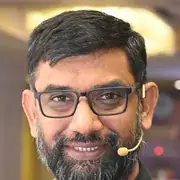
“Training is not just my profession. It's my purpose, my passion and my profession.”
You have seen diversity sessions that felt like a lecture and changed nothing by Monday. This is what he does differently.
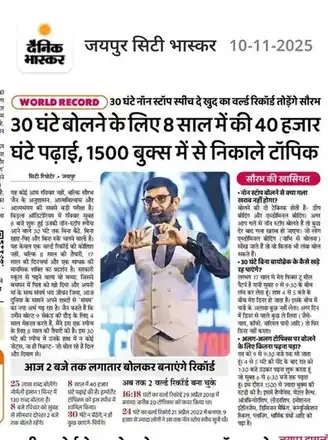
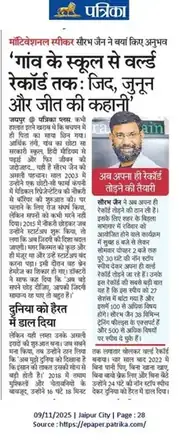
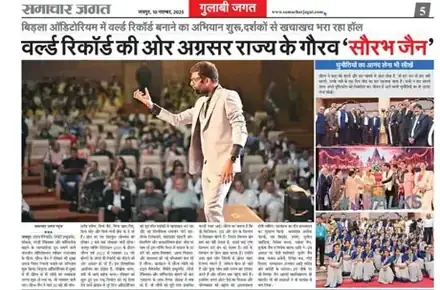
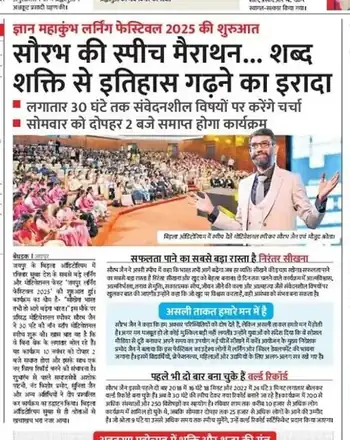
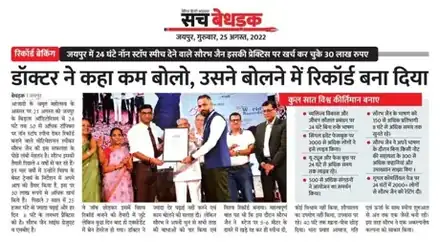
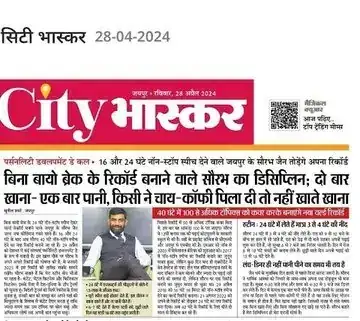
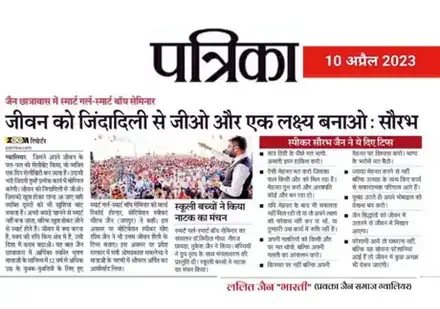
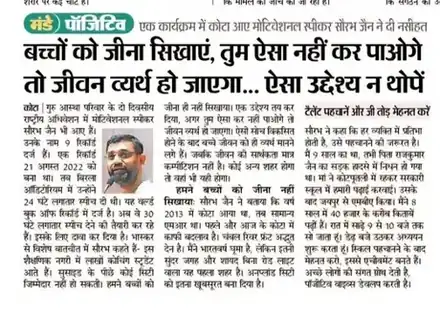
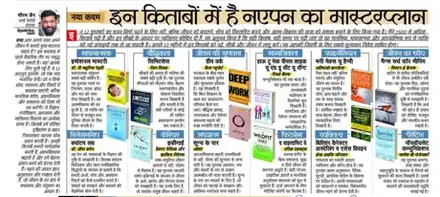
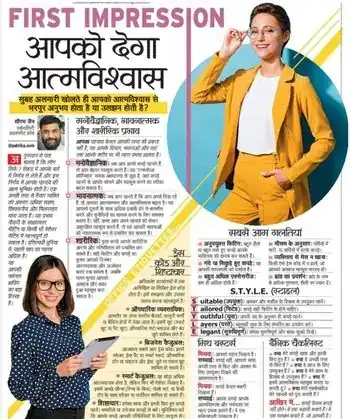
500+ media houses have covered Saurabh Jain, from Dainik Bhaskar and Rajasthan Patrika to ANI and The Print. Tap any clipping to read it.

See how he holds a room, makes hard conversations feel safe and turns a single idea into a habit. Press play on any one.
During the 26/11 Mumbai attacks, Taj hotel staff stayed back to protect guests, and Harvard Business School traced it to a culture built over decades. Pick the problem your team faced this week and see the result, the shift and how it will feel.
Korean Air once had one of the worst safety records in the world; after it trained crews to speak up across rank, it became one of the safest. Hover over or tap each card to see the shift teams experience with Saurabh Jain.
Most culture training proposals die in one meeting, on one of these five sentences. Tap yours and walk in with the answer. The decision stays yours.
If nothing changes: The problems leaders can't see keep growing quietly, until they show up as exits, complaints or headlines.
Leaders usually rate their culture higher than their teams do. An outside trainer brings out what people won't say to their boss, and turns it into change.
Proof: Uber's 'hustle' culture looked like a strength until 2017, when one engineer's blog on harassment led to an inquiry, 20+ firings and the CEO's exit.
If nothing changes: Disengagement, conflict and culture-driven exits keep draining money, every single month.
We agree the measures with you upfront: a pre and post culture score, a 90-day culture pulse, and the attrition, engagement, complaint and escalation numbers that matter to you.
Proof: Deloitte research found inclusive teams were twice as likely to meet or beat financial targets and six times more likely to be innovative.
If nothing changes: Conflict, gossip and silence already take hours of every week, and they grow as the team grows.
A half-day workshop, a full-day program or a 90-day journey, then about 15 minutes a week per team. Every hour works on your real workplace moments, so it is work, not time away from work.
Proof: A CPP Global study found employees spend about 2.8 hours every week dealing with workplace conflict.
If nothing changes: Training that fades is the costliest kind: you pay once, then keep paying for the old culture.
Culture changes when follow-up continues: team charters, a 21-day respect challenge, manager check-ins and a 90-day pulse, until the new behaviour becomes how things are done.
Proof: Harvard sociologist Frank Dobbin and Alexandra Kalev found one-off, mandatory diversity training rarely lasts, while engagement, contact and accountability do. That is how we design it.
If nothing changes: Every quarter of waiting, another round of hiring, appraisals and exits runs on the old culture.
Next quarter rarely arrives calmer. A culture problem compounds quietly, and the best people leave first.
Proof: Wells Fargo's sales-pressure culture ran for years before about 3.5 million fake accounts surfaced; one 2020 settlement alone cost $3 billion.
See what a weak culture costs your organisation every year: hours lost to conflict and silence, managers' time spent on escalations, and good people who leave. Time is valued at salary cost, conservatively, and revenue is credited only as gross profit.
Every team leaks trust in a different place: leaders to blind spots, managers to favourites, frontline teams to rudeness, new joiners to loneliness. Pick yours and see what changes.
“Our values are clear to us, but people say the culture feels different on the floor.”
Leaders who model respect, so the culture follows from the top.
“My team has talent, but only three people ever speak, and two of them don't talk to each other.”
Managers who include every voice and settle conflicts early.
“Head office and the plant feel like two different companies.”
One team, one culture, across every location and language.
“Customers notice when our own people don't respect each other.”
Teams who treat every colleague and customer with equal respect.
“We have the policies. We need people to actually live them.”
Policies turned into everyday behaviour, with a culture score to show it.
32+ industries. One proven way to build respectful, inclusive, high-trust workplaces.
Pick a duration and a setting. We shape the rest around your people, your locations and your culture goals.
You may have run diversity or POSH sessions before: polite nods in the hall, old habits by Monday. Here is why our change lasts, and shows up in voice, respect, retention and trust.
It is not "Can we afford culture training?"
It is "Can we afford to keep losing good people to a culture we never designed?"
Saurabh Jain is a Jaipur-based corporate trainer and 10-time World Record holder with 23+ years of experience, 2,500+ trainings across 32+ industries and 200+ awards. He grew up in a village, studied in a Hindi-medium government school and rose to MSD Rajasthan State Head, leading teams across regions, languages and generations, before founding EnactraX, Bharat's No. 1 Soft Skills Training Centre, and the Jaipur Learning Festival. His work culture and respect diversity training covers nine pillars: psychological safety, respect and civility, unconscious bias, the diversity dividend, inclusive communication, conflict resolution, values and trust, dignity at work and POSH awareness, and inclusive leadership.
Nine pillars, in sequence: psychological safety and speak-up culture; respect, civility and everyday courtesy; unconscious bias and fair decisions; the diversity dividend across gender, generations, regions and abilities; inclusive communication and microaggressions; conflict resolution and healthy disagreement; shared values, trust and ethical culture; dignity at work, anti-harassment and POSH awareness; and inclusive leadership, recognition and belonging. We shape the mix after a free discovery call.
Most diversity training is a one-off lecture of do's and don'ts. This program starts with a culture pulse, uses games, real workplace cases and role plays, ends with a signed team respect charter, and follows up with a 90-day culture pulse, so new behaviour becomes a habit instead of a box ticked.
Send the enquiry form on this page or WhatsApp +91 70731 88666 with your preferred dates, venue, group size and goals. We hold a free discovery call, confirm availability and send a customised proposal within one working day, along with Saurabh Jain's trainer profile for your internal approvals.
Yes. Pillar 8 builds awareness of dignity, consent and boundaries, bystander action, and how the POSH Act 2013 complaint process and the Internal Committee work. It strengthens, but does not replace, your statutory POSH program or legal advice.
Yes. It is built for workplaces in Jaipur, across Rajasthan and India, where people from different states, languages, religions, genders and generations work side by side. Sessions run in English, Hindi or both, with examples from Indian offices, plants, stores and hospitals.
Leadership teams and CXOs, people managers and team leads, diverse and multi-location teams, frontline and customer-facing staff, and HR, L&D, Internal Committee and D&I teams. We recommend the right mix and format on the free discovery call.
A half-day workshop, a full-day program, a 90-day culture journey or a monthly manager series: in person at your office, a hotel or an offsite in Jaipur, across Rajasthan and India and abroad, or live online in any time zone. The investment depends on duration, format, group size, travel and customisation, so every organisation receives a customised proposal within one working day of the discovery call.
Yes. It draws on research in psychological safety, the neuroscience of belonging and trust, unconscious bias, intergroup contact, conflict and habit formation, explained simply and applied to your workplace, never as theory for its own sake.
Every participant completes a pre and post culture score, each team signs a respect charter, and the organisation follows a 90-day culture pulse with monthly reviews. We agree the measures with you upfront, such as engagement, regretted attrition, complaints, escalations and inclusion scores.
Tell us about your people and your culture. A free discovery call, no obligation, and a reply within 24 hours.
Takes less than a minute.
We understand your culture, your people and the result you want.
Within one working day, shaped to your organisation.
Every great series ends with a celebration. With Saurabh Jain, yours starts on the first day of training and keeps paying back for years.
Your culture score, your top three culture leaks named and a respect charter signed by every team.
Meetings where every voice is heard, conflicts settled in days and a culture pulse reviewed every month.
Fewer regretted exits, fewer complaints, mixed teams that share ideas, and people proud to refer their friends.
A workplace people choose, stay in and speak well of: your strongest employer brand.
“Respect is not a policy you print. It is how you treat the person who can do nothing for you.”