Minds in survival mode can't think clearly
Stress narrows thinking to fight, flight or freeze. The WHO estimates depression and anxiety cost the world 12 billion working days a year.
Stressed minds make costly decisions. Disconnected people quit quietly. We help your team turn stress into coherence, and conflict into connection, at work and at home.
Tap every moment you have seen in your team this quarter. Each one quietly costs focus, health and good people.
It is rarely the skill. It is the state people work from. Tap a leak to find yours.
Stress narrows thinking to fight, flight or freeze. The WHO estimates depression and anxiety cost the world 12 billion working days a year.
Moods are contagious. In Yale's 'ripple effect' study, one actor's mood spread through groups and changed how they decided.
Silos, cold handovers and lonely desks. Gallup found people with a best friend at work are seven times more likely to be engaged.
Relationships shape health more than we admit. The 85-year Harvard Study of Adult Development found relationship satisfaction at 50 predicted health at 80 better than cholesterol.
Old stories say 'not good enough'. Researchers estimate up to 70% of people feel like an impostor at some point.
Old wiring runs the day. Harvard researchers found minds wander 47% of waking hours, and a wandering mind is an unhappy one.
Unhealed stress doesn't stay at home. Deloitte estimates poor mental health costs Indian employers about US$14 billion a year.
Pick the moments on the left to see your score.
moments where emotional state, not skill, decided the outcome.
Rate 12 everyday moments, see your Team Coherence Score today, and what it becomes after the program.
The program takes days. Burnout can cost years. Start before another good person quietly leaves.
Stop the loss: book a callFound your leak? Seal it before another month of stress, conflict and quiet quitting.
A new habit takes about 66 days to become automatic, found University College London. One inspiring day is never enough. Here is the full journey.
We understand your people, pressures, culture and goals, and you understand exactly how we work.
What you get: An honest picture of how your team feels today.
A confidential pulse survey, leader conversations and HR data reveal the real gap. It is often not the one first named.
What you get: The right problem, before anyone spends on a solution.
We pick the modules, depth and format that fit your people, your culture and your budget.
What you get: A program designed for you, not borrowed.
Breathwork, games, reflection and partner practices, each aimed at the gap we diagnosed.
What you get: Shifts people feel in their own body, in the room.
Each person chooses their own practice in their own words. Chosen goals outlast imposed ones.
What you get: People who own the change, because they chose it.
A 21-day practice journal, short refreshers and buddy check-ins keep the new state alive.
What you get: Practices that become daily habits.
Regular pulse checks catch what is slipping and adjust the plan in time.
What you get: Progress you can see, problems caught early.
From a restructuring to a festive-season crunch, we bring the next learning exactly when your team needs it.
What you get: A team that keeps growing after the program.
A culture of calm, care and honest connection takes root, and every new joiner learns it from the team.
What you get: The result you invested in: a team that thrives.
Training is one step out of nine. The other eight are why the results last.
A fruit basket can't fix loneliness the US Surgeon General compares to smoking 15 cigarettes a day. Pick your problem and see the root.
Love here means coherence, care and conscious connection, with yourself first, then with every person you work and live with. Nine skills, in sequence. Tap the wheel.
People think, feel and act out of sync. Stress scatters attention and every decision costs more.
The science In a HeartMath workplace program, employees with high blood pressure cut it by about 10 mmHg in three months.
World-proven Before the Chicago Bulls kept losing playoff battles to the Pistons. After Phil Jackson trained mindful calm, and six titles followed.
Feelings are ignored until they explode in meetings, mails or at home.
The science UCLA brain scans show simply naming a feeling calms the brain's alarm centre, the amygdala.
World-proven Before Microsoft was known for a cut-throat, know-it-all culture. After Satya Nadella made empathy the culture, and its value grew about tenfold.
People work side by side but stay strangers. Silos grow and trust thins.
The science UC Davis researchers found couples' heart rates and breathing fall into sync just by sitting together.
World-proven Before in 1665, Christiaan Huygens set two pendulum clocks swinging out of step. After sharing one beam, they fell into sync: the first record of 'entrainment'.
Relationships run on expectation, scorekeeping and blame, at home and at work.
The science Stony Brook brain scans found couples married about 21 years still show the reward response of new love.
World-proven Before Michelle Obama felt resentful and alone in her marriage. After counselling taught her that her happiness was her own to build.
Anger, anxiety and frustration are bottled up, then leak out on the wrong person.
The science Stanford research found that hiding emotions in a conversation raised the other person's blood pressure.
World-proven Before a mocking letter by young Abraham Lincoln nearly ended in a duel. After he wrote angry 'hot letters', and never sent them.
Old stories, 'I'm not enough', 'I'll be judged', keep capable people small and silent.
The science At UC Berkeley, people who met a failure with self-compassion studied longer to improve.
World-proven Before 27 years in prison could have left Nelson Mandela bitter. After he let go of the story, forgave, and led a nation.
Old wiring runs the day: same triggers, same reactions, same results.
The science UCL scans of London taxi drivers showed the brain's memory centre physically grows with practice.
World-proven Before a stroke left neuroscientist Jill Bolte Taylor unable to walk, talk or read. After she rewired her brain in eight years and taught the world how.
People live in their heads, ignore the body's signals and run on empty.
The science Breathing at about six breaths a minute raises heart rate variability, a marker of resilience.
World-proven Before panic under fire costs lives. After US Navy SEALs train 'box breathing' to stay calm and decide clearly.
Partners, colleagues and families share space but not attention. Nobody sees a future worth working for.
The science At Stanford, people shown their aged future self chose to save more for that future.
World-proven Before in Beijing 2008, Michael Phelps' goggles filled with water. After he had rehearsed every stroke in his mind, swam blind and won gold.
People forget what they hear. They remember what they feel and do. Tap each step and try it.
Experience, understand, practise, apply. High-energy games balanced by deep, quiet moments of insight.
Feel the 9 Quantum Love skills in action with your own people, your real pressures and your real goals.
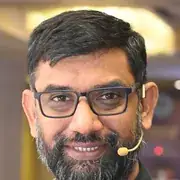
The best way to learn inner transformation is from someone who has lived it. Saurabh Jain lost his father at 8, survived a brain haemorrhage and rebuilt his life from debt, then went on to set 10 World Records. Founder of EnactraX, he has conducted 2,500+ trainings across 32+ industries and studied 1,500+ self-help books. He brings both sides to your team: the science of emotion and connection, and the lived proof that people can change. No jargon. Just practices your people use the same evening.
A venture of Pragya. Bharat’s No. 1 Soft Skills Training Centre.
“Learning & Motivation का महाकुम्भ”, home of the 30-hour non-stop speech.
Each one could have ended the story. Tap a card and see what happened next.
जिन्दगी मैं फिर तैयार हूँ, तू कोई कमी मत छोडना मेरे मजे लेने में,क्योंकि मैं कोई कसर नहीं छोड़ने वाला तेरे मजे लेने में."Life, I am ready again. Don't hold back in testing me, because I won't hold back in living you."
Saurabh JainHis core belief: love is not luck or a feeling you wait for. It is a learnable state of coherence, and that is exactly what he teaches your team.
“Training is not just my profession. It's my purpose, my passion and my profession.”
Your people have sat through wellness talks that felt good on the day and changed nothing. This is what he does differently.
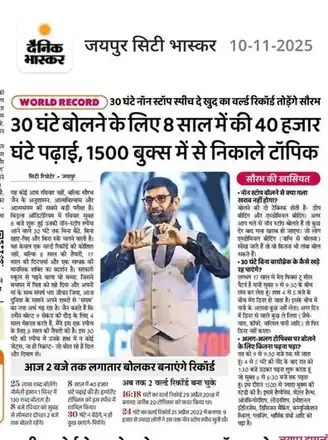
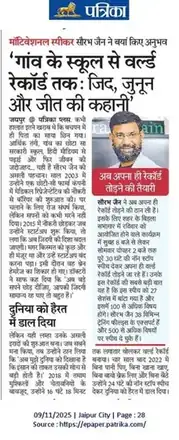
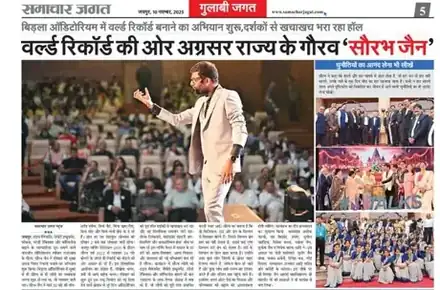
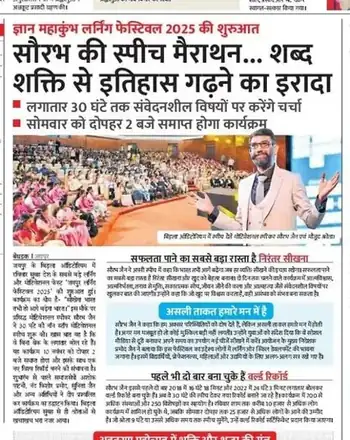
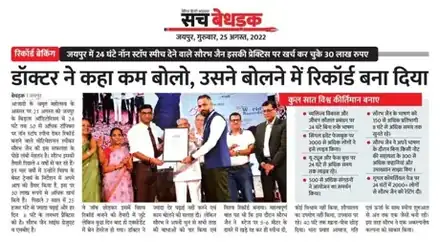
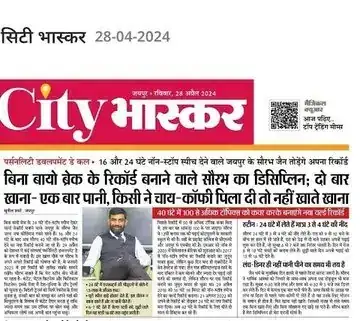
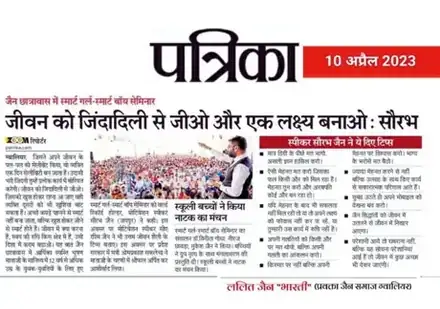
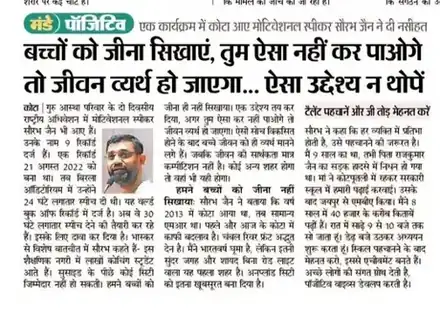
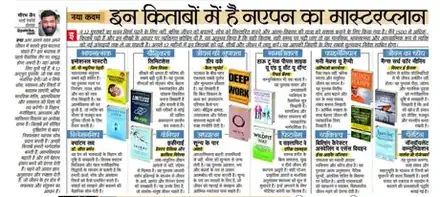
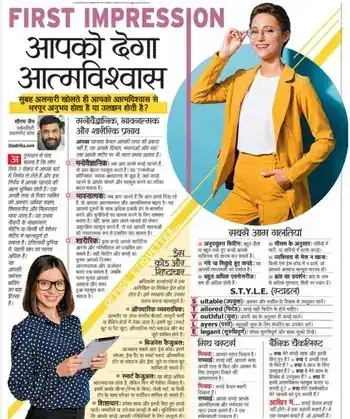
500+ media houses have covered Saurabh Jain, from Dainik Bhaskar and Rajasthan Patrika to ANI and The Print. Tap any clipping to read it.

See how he holds a room, shifts its energy and makes one idea stick. Press play on any one.
Choose what is holding your team back. See the result, the shift and how it will feel.
Hover over or tap each card to see the shift people experience with Saurabh Jain.
Most wellbeing proposals die in one meeting, on one of these five sentences. Tap yours and walk in with the answer.
If nothing changes: Unspoken feelings keep leaking into meetings, mails and missed deadlines.
Your people bring their whole heart to work, whether you train it or not. We keep it professional: voluntary sharing, no forced confessions, all practical.
Proof: When terrorists attacked the Taj in 2008, staff stayed to shield guests. Harvard Business School traced it to a culture of care.
If nothing changes: Wellbeing that can't show results is the first budget line cut, and the burnout continues.
We agree the measures upfront: pre and post wellbeing pulse, practice journals, manager observation and HR numbers like leave and attrition.
Proof: Wharton research in long-term care found a culture of 'companionate love' meant less burnout, less absenteeism and happier patients.
If nothing changes: Your people already lose hours every week to stress, conflict and distraction.
Half-day modules, staggered batches, online sessions and two-minute practices built into the working day.
Proof: While running PepsiCo, Indra Nooyi still found time to write to the parents of hundreds of her senior executives.
If nothing changes: A wellness day that fades is the costliest kind: you pay once, then keep paying for burnout.
Ours continues: a 21-day practice journal, buddy check-ins, short refreshers and pulse reviews.
Proof: In a University of North Carolina study, seven weeks of loving-kindness practice built lasting resources: more purpose, fewer illness symptoms.
If nothing changes: Every quarter of waiting, more good people burn out, disengage or resign.
Next quarter rarely arrives calmer, and every person lost to burnout is lost for good.
Proof: In 2000, Blockbuster could have bought Netflix for US$50 million. It waited, and filed for bankruptcy in 2010.
See what stress and disconnection cost you every year: days lost, productivity drained and good people who quit. Since 2019 the WHO classifies burnout as an occupational phenomenon. We use conservative figures only.
If your people work with other people, their emotional state is already shaping your results. Pick a group.
“We are brilliant on strategy, but the leadership team doesn't trust each other.”
A coherent top team whose calm cascades through the whole organisation.
“I spend half my day managing moods, not work.”
Managers who steady their teams instead of absorbing every storm.
“By the tenth angry customer, there is nothing left to give.”
People who stay calm, kind and energised until the last call.
“Bright young people, but anxious, scattered and quick to quit.”
Grounded young talent with self-worth and a future they want to build here.
“Our people are present at work, but their minds are stuck in problems at home.”
Calmer homes, and people who arrive at work whole.
32+ industries. One proven way to build calm, connected, thriving people.
Pick a duration and a setting. We shape the rest around your people and your goals.
Your team may have had a yoga hour or a motivational talk. It felt good for a week. Here is why our change lasts.
It is not "Can we afford emotional wellbeing training?"
It is "Can we afford another year of burnout and quiet quitting?"
Southwest Airlines chose LUV as its stock ticker, and stayed profitable for 47 straight years.
Saurabh Jain is a Jaipur-based Quantum Love coach, corporate trainer and motivational speaker with 23+ years of experience. He is the founder of EnactraX, Bharat's No. 1 Soft Skills Training Centre, and the Jaipur Learning Festival. He has conducted 2,500+ trainings across 32+ industries, holds 10 World Records, including a 30-hour non-stop speech, and has received 200+ awards. His Quantum Love program helps teams build emotional coherence, emotional intelligence and conscious connection, at work and at home.
Quantum Love treats love as a learnable state of coherence, not luck: heart, mind and actions aligned, and a conscious connection with others. 'Quantum' is used as a metaphor for how connected people influence each other. The program draws on heart rate variability research, emotional intelligence, neuroplasticity and relationship science. For example, John Gottman's research predicts relationship outcomes from everyday interaction patterns, and a 148-study meta-analysis by Julianne Holt-Lunstad found strong social relationships raise the odds of survival by 50%. Ancient frameworks such as the chakra system are used as maps for self-awareness, not as medical claims.
Because stress, conflict and disconnection show up as sick leave, attrition, silos and quiet quitting. The program builds calm, emotionally intelligent people who connect, recover faster and bring their best to work. You can track the change through pre and post wellbeing pulse surveys and your own HR data: stress-related leave, attrition, engagement scores and conflict escalations.
Nine skills, in sequence: Quantum Love & Emotional Coherence; Emotional Intelligence & Energetic Awareness; Energetic Connection & Entanglement; From Romantic Love to Quantum Love; Emotional Energy & Inner Transformation; Healing Your Story & Reclaiming Worthiness; Rewiring the Brain & Shifting Consciousness; The Energetic Body, Chakras & Conscious Connection; Conscious Partnership, Intimacy & Future Self. It suits leadership and CXO teams, managers and team leads, high-pressure customer-facing teams, young professionals and new joiners, and employees with their families. We recommend the right mix and batch size on the discovery call.
Yes. Every session is respectful, voluntary and confidential, and nobody is asked to share anything personal. Intimacy is taught as emotional closeness and attention: being truly seen and heard. Couples and family versions can be run for family days and wellness weeks.
Half day, full day, a few days, or regular weekly or monthly sessions. Saurabh Jain delivers in-person Quantum Love workshops anywhere in the world from his Jaipur base: your office, a resort or your offsite, across Rajasthan, every Indian city and internationally. Live online sessions are available in any time zone, in English, Hindi or a mix of both.
The investment depends on duration, setting, number of participants and customisation, so every organisation gets a customised proposal within one working day of the discovery call. The wellbeing ROI calculator on this page compares the cost with the workdays, productivity and people you can win back.
Everyone takes a pre and post wellbeing pulse and knowledge check, keeps a 21-day practice journal and leaves with a personal practice plan. We agree organisation measures with you upfront, such as stress-related leave, attrition, engagement scores and conflict escalations. Each participant receives a certificate and a workbook, and your organisation receives a summary of the change.
Talk to Saurabh Jain about your people, your pressures and what stress is costing you. Free, no obligation, and a reply within 24 hours.
Takes less than a minute.
We understand your people, culture and goals.
Within one working day, shaped to your team.
Every great series ends with a celebration. With Saurabh Jain, yours starts on the last day of the program and never really ends.
Certificates, a few happy tears and people who walk out lighter, calmer and closer.
The practice journal is complete. Coherent breathing and conscious responses happen without thinking.
Fewer conflicts, fewer sick days, warmer handovers and people who stay.
Love compounds. Calmer homes, stronger teams and people who pass it on.
“Teams don't burn out from work. They burn out from disconnection.”